
This website uses cookies to improve your experience. We'll assume you're ok with this, but you can opt-out if you wish. Read More
APPLICATION RECOMMENDATIONS
Test Your Soil
Maximum economic yield begins with a soil test to determine key soil nutrients your crops need. Your own experience, combined with soil testing is the first step to achieving a high yielding, high quality crop. Regular soil testing and the use of the appropriate Rainbow Plant Food grades will help you achieve complete nutritional balance for your crops.
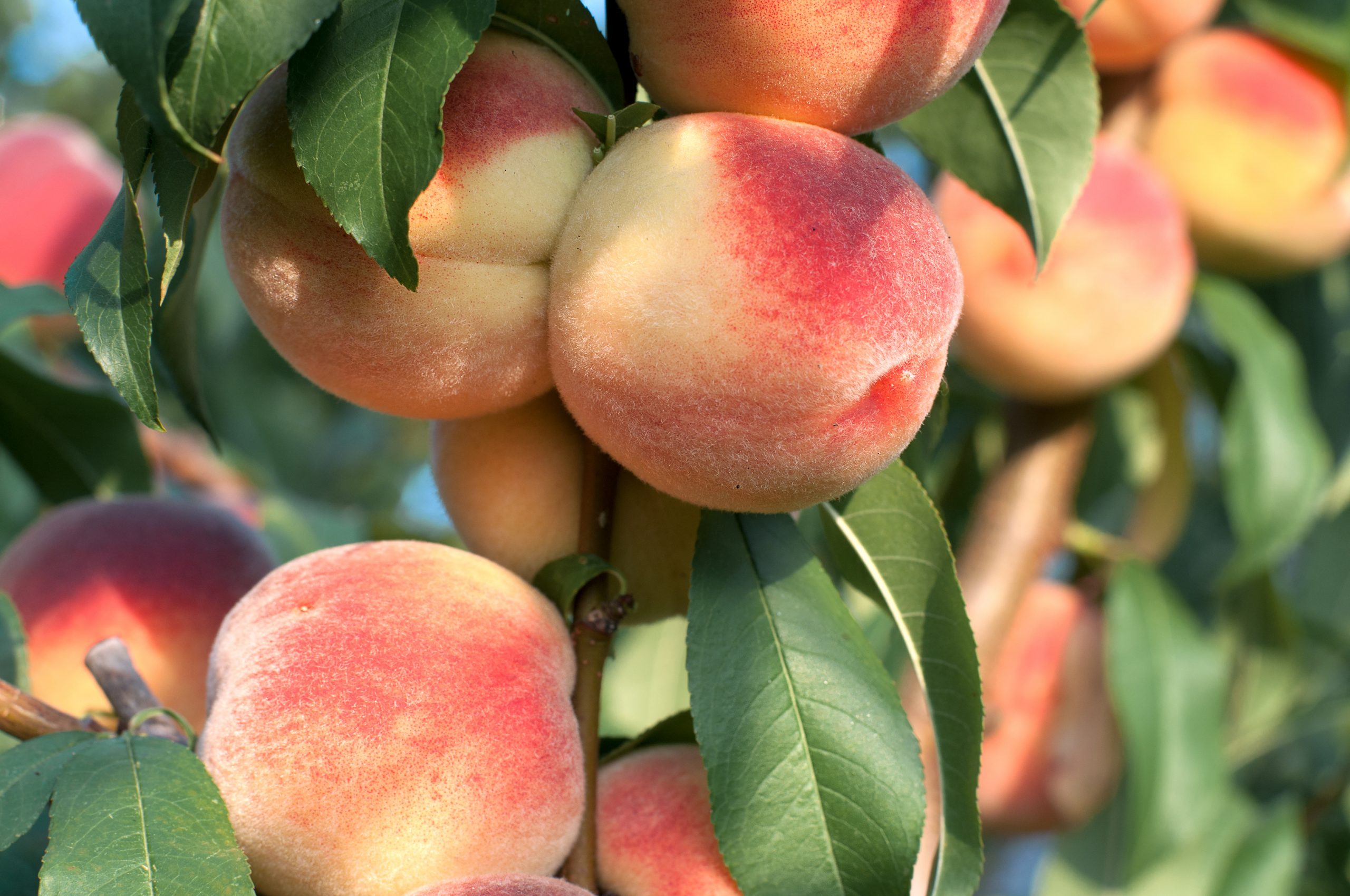
Peaches
Peaches are grown in a variety of climates and soil conditions. Just like the variety of growing conditions, the nutritional needs of orchards are different and should be modified as needed.
Nitrogen is a key nutrient needed for tree growth and fruiting. Nitrogen reacts strongly to pruning and irrigation. Establishing high nitrogen levels during the early season can result in maximum fruit growth through adequate pruning and soil moisture.
Nitrogen should be applied annually, whereas phosphorus and potassium should be applied based on soil test levels. Overfertilization can cause vegetative growth, leading to internal canopy shading and reducing flower bud production for the next year’s crop. Excessive vegetative growth can also affect the color, taste and overall fruit quality.
Readily Available Nutrients:
Rainbow Plant Food is a chemically homogeneous compound providing the same amount of micronutrients in each granule. With Rainbow Plant Food, growers get a consistent spread of nitrogen, phosphorus and potassium and other micronutrients needed to give peach trees the nutrients they need when they need it. In uniform size and shaped, water-soluble granules take the nutrients right to the roots of trees.
Application Recommendation:
There are certain variables you’ll want to consider before applying Rainbow Plant Food to feed your crops. It’s important to know what is already in your soil prior to deciding on additional nutrients. Soil testing is the first step to understanding what your crops need. A grower should always start with a soil test. Knowing what is in your soil will help to avoid over-application of any nutrient, and subsequently avoid a toxicity problem that could negatively impact your yields.
First-year orchard fertilization depends on when the trees are planted. Trees planted in the dormant winter months, January through March, shouldn’t be fertilized until August. Fertilizer should not be incorporated during planting or applied to the soil surface around newly planted trees until the soil is settled, as this can shock the new tree. Second-year trees should be fertilized three times from March through August, and mature trees can be fertilized three times between June and August.
You’ll also want to think of your crop type prior to application. Traditional row crop types will generally only need one application of Rainbow Plant Food, but turf and ornamentals may require multiple applications depending on their nutrient needs.
Talk to your local retailer or local extension office for specific recommendations.
Recommended Grades:
Super Rainbow
| N | P | K | Mg | Ca | S | B | CU | Fe | Mn | Zn | Cl | NN |
|---|---|---|---|---|---|---|---|---|---|---|---|---|
| 10 | 10 | 10 | 2.00 | 3.00 | 12.00 | .070 | .25 | .10 | 6.00 | .50 | ||
| 16 | 4 | 8 | 1.00 | 12.00 | .030 | 3.00 | .30 | .10 | 6.00 | 1.00 |