
This website uses cookies to improve your experience. We'll assume you're ok with this, but you can opt-out if you wish. Read More
APPLICATION RECOMMENDATIONS
Test Your Soil
Maximum economic yield begins with a soil test to determine key soil nutrients your crops need. Your own experience, combined with soil testing is the first step to achieving a high yielding, high quality crop. Regular soil testing and the use of the appropriate Rainbow Plant Food grades will help you achieve complete nutritional balance for your crops.
Crop Resources
Tomato
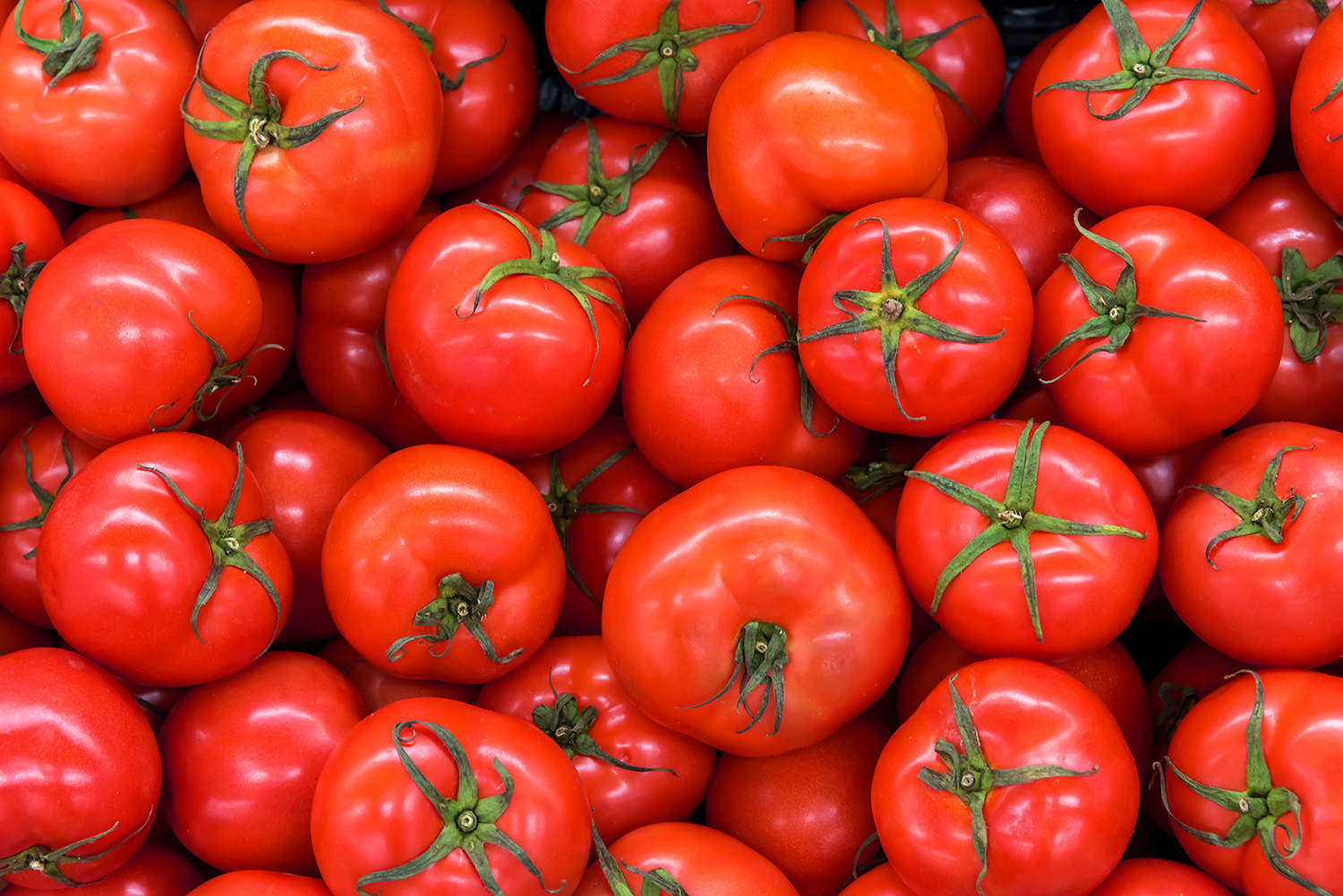
Proper fertilization is critical for successful plant yields, high tomato quality and eye appeal when your produce hits the grocer’s shelves.In the early stages, high-yielding tomatoes require large amounts of potassium to stimulate root growth. Too much of this nutrient, however, can restrict plant absorption of magnesium, which is essential for chlorophyll production.
Most potassium sources contain chloride that may reduce the quality of sensitive plants and shorten shelf life. Rainbow fertilizers contain a low chloride level that will not harm your tomatoes.
Choosing a fertilizer with the correct form of nitrogen is critical. Ammonium may restrict growth and negatively affect quality. Applying too much nitrogen can also result in plants with lush foliage but little fruit production.
A full spectrum of secondary nutrients and micronutrients (calcium, magnesium, sulfur, boron, iron, manganese, and zinc) are required by tomato plants. If one or more of these nutrients is a limiting factor, yield potential may be limited.
Crop Resources
Readily Available Nutrients:
Select a fertilizer that exists in a highly available water-soluble sulfate form so it can move quickly through the soil profile to reach tomato roots in time to promote a healthy, hearty plant.
Application Recommendation:
There are certain variables you’ll want to consider before applying Rainbow Plant Food to feed your crops. It’s important to know what is already in your soil prior to deciding on additional nutrients. Soil testing is the first step to understanding what your crops need. A grower should always start with a soil test. Knowing what is in your soil will help to avoid over-application of any nutrient, and subsequently, avoid a toxicity problem that could negatively impact your yields. Geographic location also plays a big role in soil type and will impact when the ideal time is for you to apply.
You’ll also want to think of your crop type prior to application. Traditional row crop types will generally only need one application of Rainbow Plant Food, but turf and ornamentals may require multiple applications depending on their nutrient needs.
Talk to your local retailer or local extension office for specific recommendations.
Recommended Grades:
Super Rainbow
| N | P | K | Mg | Ca | S | B | Fe | Mn | Zn | Cl | NN |
|---|---|---|---|---|---|---|---|---|---|---|---|
| 5 | 12 | 12 | 3.0 | 6.0 | 7.0 | .15 | .20 | .40 | .30 | 2.0 | 2.00 |
| 6 | 12 | 18 | 3.0 | 2.0 | 8.0 | .033 | .10 | .10 | .10 | 3.0 |